
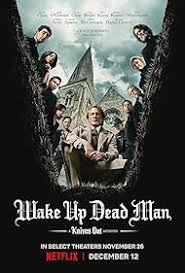
“Wake Up Dead Man” is a phrase that spans music, folk tradition, and modern cinema—most recently resurfacing as the title of Wake Up Dead Man: A Knives Out Mystery, the 2025 Netflix mystery directed by Rian Johnson. Its layered meanings encompass spiritual yearning, cultural reflection, and narrative mystery. (Wikipedia)
🎬 Wake Up Dead Man (2025 Film)
Released in 2025, Wake Up Dead Man: A Knives Out Mystery serves as the third movie in Rian Johnson’s acclaimed Knives Out franchise, with Daniel Craig returning as the eccentric private detective Benoit Blanc. The film premiered at the Toronto International Film Festival and launched on Netflix in December 2025. (Wikipedia)
The plot dives deep into mystery and morality, centering on the murder of a parish leader and the investigation that follows, weaving themes of faith, truth, and human imperfection. The narrative’s gothic and introspective tone marks a clear departure from earlier entries in the franchise. (Wikipedia)
🎼 Wake Up Dead Man — U2 Song Background
Long before its cinematic use, Wake Up Dead Man was known as the closing track of U2’s 1997 album Pop. Written by Bono and The Edge, the song features some of the band’s darkest lyrical content, with Bono pleading for Jesus to return and resolve a troubled world. It stands out in U2’s catalog for its raw emotional honesty and rare profanity in lyrics. (Wikipedia)
Despite not being a chart hit, the song has endured as a fan favorite for its atmospheric mood and existential questioning. It also reflects U2’s creative experimentation during the Pop sessions. (Wikipedia)
📜 Lyrics and Thematic Meaning
The central refrain—“Wake up, wake up dead man”—is an evocative plea. U2’s lyrics reflect desperation, spiritual longing, confusion, and the human quest for meaning:
- A direct call to the divine (“Jesus, Jesus help me…”).
- A lament for the state of the world and feeling alone in it.
- A mix of spiritual hope and existential weariness.
This duality embodies humanity’s paradox: yearning for redemption yet confronting inner doubt. (U2Songs)
Scholars and fans have interpreted “dead man” symbolically—as spiritual death, moral numbness, or the collective sleep of society. The call to wake up becomes a metaphor for awareness, change, and renewal. (U2 Feedback)
📚 Title Origin: Folk Roots & Artistic Continuity
Rian Johnson has stated that the Knives Out 3 title draws from two primary influences:
- An older phrase heard in American folk music, particularly from recordings like Ain’t No More Cane on de Brazos. (Wikipedia)
- The U2 song of the same name, which had lodged in his imagination as an evocative, thematic anchor for the film’s mood and identity. (GoneTrending)
The Knives Out franchise has a tradition of borrowing titles from songs (e.g., Glass Onion from The Beatles), and Wake Up Dead Man continues this pattern with layered meaning. (GoneTrending)
📺 Trailer and Visual Tone
The official trailer for Wake Up Dead Man: A Knives Out Mystery reinforces the movie’s thematic stakes—mystery, moral ambiguity, and spiritual undertones—setting it apart from traditionally lighter whodunits. Daniel Craig’s Blanc navigates a world not just of secrets but of existential puzzles and ethical contradictions. (YouTube)
🧠 Critical and Cultural Reception
Early reviews highlight Rian Johnson’s daring thematic shift, praising the film’s introspective tone and character depth. Critics note that this story feels more introspective and textured than previous franchise entries. (Wikipedia)
Fans and scholars alike have praised the way the project marries traditional mystery tropes with inquiries into faith, sanity, and societal exhaustion—echoing the emotional resonance of the U2 song that shares its title.
🌀 Why the Phrase Resonates
The phrase “Wake Up Dead Man” operates on several levels:
- Spiritual/Religious: A cry for divine intervention or awakening.
- Existential: A metaphor for awareness and self-realization.
- Narrative: A compelling title for a mystery story about hidden truths.
- Cultural: Its evolution from folk music to rock lyrics to film underscores its adaptability.
This multi-layered appeal helps explain why the phrase has endured across decades and artistic forms.
🏁 Conclusion: The Lasting Power of “Wake Up Dead Man”
From its origins in American folk traditions to its reinvention as a reflective rock song by U2, and now as the evocative title of a major Netflix mystery, Wake Up Dead Man encapsulates deep human longings—spiritual, emotional, and intellectual.
This rich cross-medium legacy means the phrase resonates far beyond its original contexts, inviting audiences to consider not just who must wake up, but what awakening means in a world marked by complexity, uncertainty, and moral ambiguity.
