
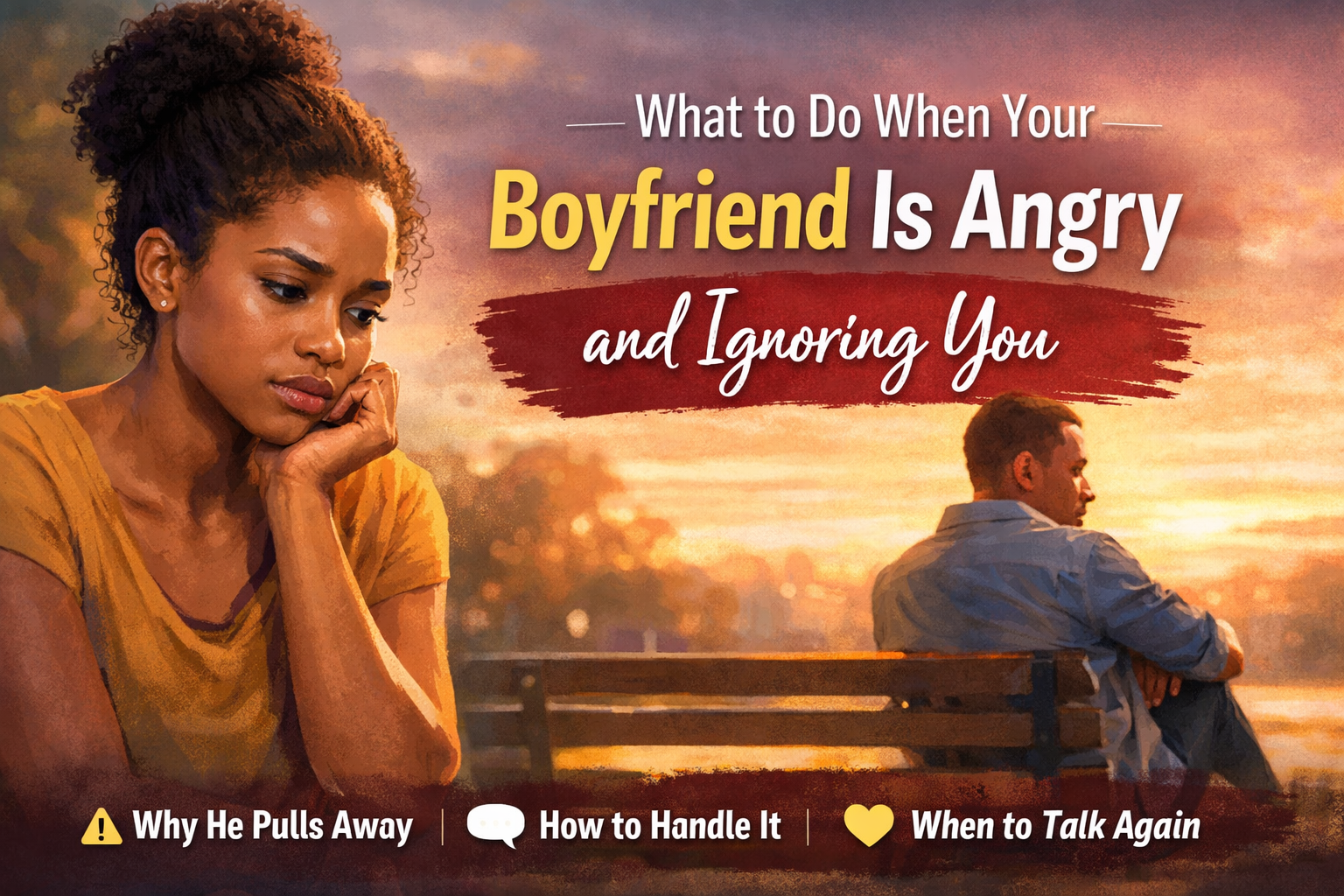
When Silence Feels Loud
There’s a particular kind of frustration that comes when someone you care about suddenly goes quiet.
No calls.
No replies.
Just… silence.
You replay your last conversation over and over in your head. Was it something I said? Did I go too far? Why won’t he just talk to me?
If your boyfriend is angry and ignoring you, you’re not alone. This happens in a lot of relationships—and while it feels personal, it’s often not as simple as “he doesn’t care.”
Let’s talk about what’s really going on—and what you should actually do next.
First, Take a Breath—This Is More Common Than You Think
Before you jump to conclusions, understand this: a lot of people (especially men) don’t deal with conflict by talking immediately.
Some shut down.
Some disappear for a bit.
Some need space to think before they say anything.
It doesn’t always mean the relationship is in danger.
Sometimes, it just means he’s overwhelmed.
Why He’s Pulling Away Instead of Talking
This is the part that can be hard to accept.
When you want to fix things quickly, and he does the exact opposite—it feels like he’s making things worse on purpose.
But most of the time, he’s not.
For many guys, anger isn’t something they’re used to expressing calmly in the moment. Instead of risking saying something hurtful, they step back.
Think about it like this:
- You want connection when things go wrong
- He wants distance to calm down
Neither of you is wrong. You’re just responding differently.
What It Feels Like on Your Side
Let’s be honest for a second.
When he ignores you, it can feel like:
- You’re being punished
- He doesn’t care
- You’re the only one trying
- The relationship is slipping away
And that feeling? It can make you want to:
- Send multiple messages
- Call repeatedly
- Demand an explanation
That reaction is completely human.
But here’s the hard truth…
👉 Chasing him in that moment usually makes him pull away even more.
What’s Probably Going on in His Head
Even though he’s not talking, it doesn’t mean he’s not thinking.
In fact, he might be going over everything:
- What started the argument
- Whether he overreacted
- How what you said affected him
- What he should say next
- Whether talking now will make things worse
Some people just need time to organize their thoughts before they can express them.
And if he’s not great at handling emotions, that process takes even longer.
So… Should You Leave Him Alone?
Short answer: yes—but not in a cold or distant way.
There’s a difference between:
- Ignoring him back ❌
- Giving him space respectfully ✅
Giving space doesn’t mean you don’t care. It actually shows maturity.
You’re basically saying:
“I’m not going to force this. We’ll talk when we’re both ready.”
What You Can Do Instead (That Actually Helps)
If you’re wondering what to do during that silence, here’s something practical.
1. Don’t Panic Text
Sending 5–10 messages in a row might feel good in the moment… but it usually backfires.
It can make him feel pressured instead of understood.
2. Send One Calm Message (If You Need To)
Something simple works best:
“I can tell you’re upset. I’ll give you some space, but I’m here when you’re ready to talk.”
That’s it. No essays. No emotional pressure.
3. Step Away From Your Phone
Constantly checking for a reply will only make you more anxious.
Go do something else:
- Watch something
- Talk to a friend
- Go out for a bit
Give your mind a break.
4. Reflect (Without Blaming Yourself)
This part matters.
Ask yourself honestly:
- What triggered the argument?
- Could I have handled anything better?
- Was there a misunderstanding?
This isn’t about taking all the blame—it’s about understanding the situation clearly.
When He Finally Comes Back
At some point, he probably will.
And when he does, how you respond can either fix things… or restart the argument.
Here’s what helps:
Listen First
Let him talk. Even if you disagree.
Sometimes people just want to feel heard before anything else.
Don’t Attack
Avoid things like:
- “You always do this”
- “You never listen”
That just puts him back on the defensive.
Be Honest, But Calm
You can express how you felt without escalating things:
“When you stopped talking to me, I felt really hurt and confused.”
That’s very different from:
“You ignored me like I don’t matter.”
Same message—completely different impact.
A Small Truth Most People Don’t Talk About
Not everyone knows how to communicate well in relationships.
Some people were never taught:
- How to express anger
- How to talk through problems
- How to stay present during conflict
So instead, they avoid.
It’s not always intentional—it’s just what they know.
But… When Should You Be Concerned?
There’s a line between needing space and being emotionally unavailable.
Pay attention if:
- He ignores you for days with no explanation
- He never comes back to resolve issues
- This happens every time there’s a problem
- He uses silence to control or punish you
That’s not healthy communication.
And over time, it can damage the relationship.
How to Avoid This Pattern in the Future
You can’t stop every argument—but you can make them easier to handle.
Try having a calm conversation (when things are good) about:
- How each of you deals with conflict
- How much space is okay
- How long is too long without talking
Even something simple like:
“If we argue, can we agree to talk within a day?”
That kind of agreement can make a huge difference.
The Part Most People Forget
Relationships aren’t about never fighting.
They’re about how you handle things after the fight.
Do you:
- Understand each other better?
- Learn something new?
- Improve how you communicate next time?
Or…
Do you just repeat the same cycle?
Final Thoughts
If your boyfriend is angry and ignoring you, it hurts. There’s no way around that.
But silence doesn’t always mean the worst.
Sometimes it means:
- He needs time
- He’s overwhelmed
- He doesn’t know how to express himself yet
The best thing you can do isn’t to chase or force a conversation.
It’s to stay calm, give space, and be ready to talk when the moment is right.
Because in the end, strong relationships aren’t built on avoiding conflict…
They’re built on learning how to come back from it—together.
