
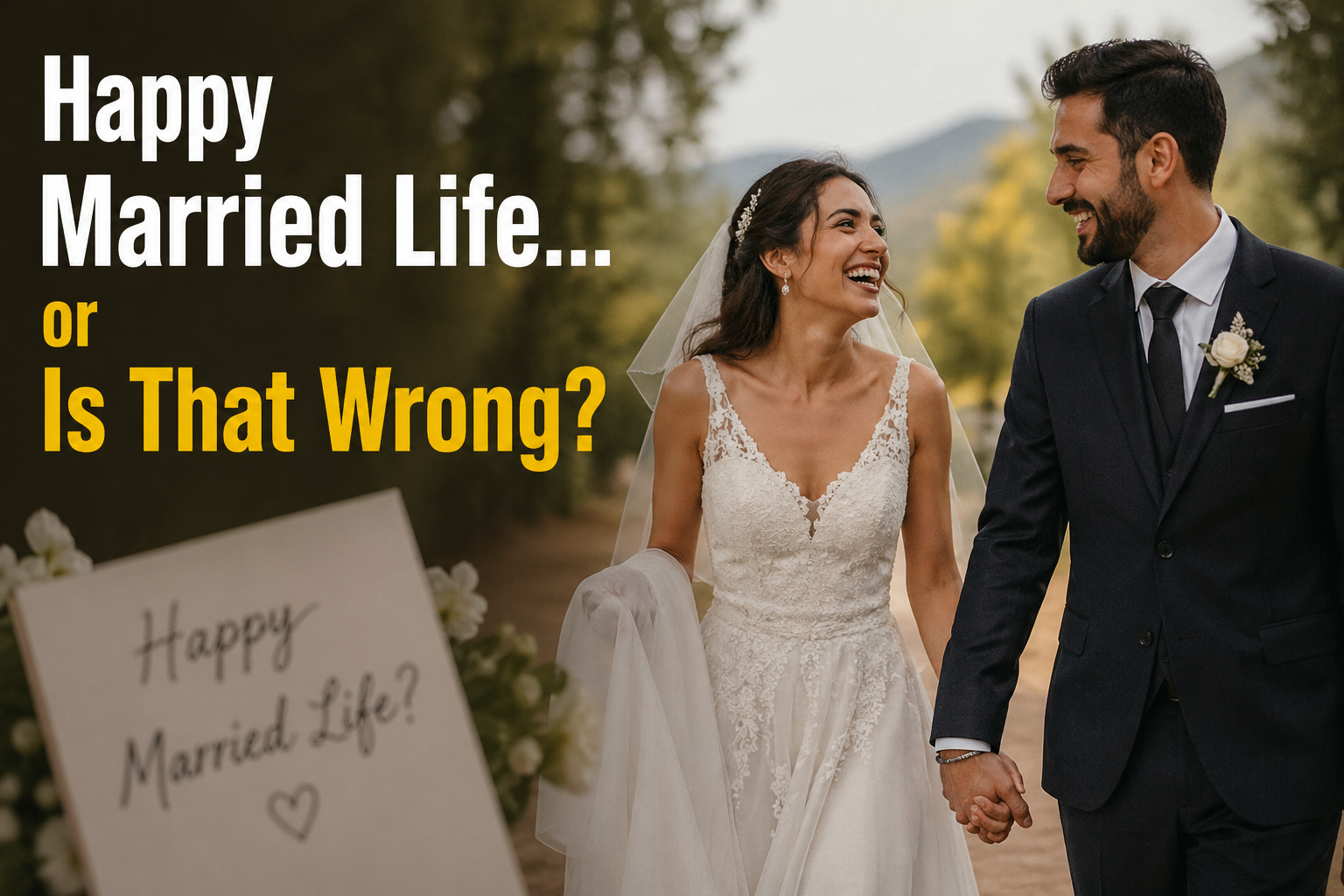
Introduction: Why This Small Phrase Confuses So Many People
When it comes to wedding wishes, people often hesitate between saying “happy married life” and “happy marriage life.” It seems like a tiny difference, but in English, small phrasing choices can completely change how natural (or awkward) something sounds.
If you’ve ever paused before writing a wedding card or sending a congratulatory message, you’re not alone. This confusion is incredibly common, especially among non-native English speakers.
In this guide, you’ll learn:
- Which phrase is actually correct
- Why one sounds natural and the other doesn’t
- Better alternatives that native speakers actually use
- Real examples you can copy instantly
Let’s clear this up once and for all.
“Happy Married Life” vs “Happy Marriage Life”: Which One Is Correct?
1. “Happy Marriage Life” — Incorrect and Unnatural
Let’s start with the one you should avoid.
The phrase “happy marriage life” is not idiomatic in English. Native speakers simply don’t use it. It sounds forced because:
- “Marriage” already refers to the relationship itself
- Adding “life” after it creates redundancy
- It doesn’t follow natural English phrasing patterns
👉 Bottom line: Avoid this phrase completely.
2. “Happy Married Life” — Acceptable but Not Perfect
Now, this one is a bit more nuanced.
“Happy married life” is:
- Common in some regions (especially South Asia and parts of Africa)
- Understandable to native speakers
- Often used in casual greetings
However, in standard English, it still sounds slightly unnatural compared to better alternatives.
👉 Example:
- “Wishing you a happy married life.” ✔ (acceptable)
- But not the most natural phrasing
The Most Natural Alternatives (What Native Speakers Actually Say)
If you want your message to sound fluent and polished, these are the phrases you should use instead:
1. “Wishing You a Happy Marriage”
This is the most straightforward and idiomatic option.
👉 Example:
- “Wishing you a happy marriage filled with love and laughter.”
2. “A Long and Happy Marriage”
This is the gold standard for wedding wishes.
👉 Example:
- “May you have a long and happy marriage.”
Why it works:
- Sounds warm and timeless
- Common in wedding cards
- Universally understood
3. “Happily Married” (Descriptive Form)
Use this when describing a couple rather than directly wishing them.
👉 Example:
- “May you be happily married for many years to come.”
4. “Wishing You a Lifetime of Love and Happiness”
This is more emotional and less formal.
👉 Example:
- “Wishing you a lifetime of love, joy, and happiness together.”
5. “Best Wishes on Your Marriage”
Simple, clean, and widely used.
👉 Example:
- “Best wishes on your marriage and your new journey together.”
Why “Happy Married Life” Became Popular Anyway
Even though it’s not fully idiomatic, “happy married life” became popular due to:
1. Direct Translation from Other Languages
In many languages, phrases equivalent to “married life” are common and natural. When translated directly into English, the structure doesn’t always carry over perfectly.
2. Social Media and Messaging Culture
Short, simple phrases spread quickly online. Over time, even slightly incorrect expressions become widely accepted in casual use.
3. Cultural Influence
In some regions, this phrase is used so frequently that it feels completely normal—even if it’s not standard English.
Wedding Wishes That Actually Sound Natural (Ready-to-Use Examples)
Here are some polished, natural-sounding wedding wishes you can copy:
Classic & Formal
- “May you enjoy a long and happy marriage.”
- “Wishing you both a lifetime of love and happiness.”
- “Congratulations on your marriage and best wishes for the future.”
Warm & Personal
- “May your love grow stronger with each passing day.”
- “Wishing you endless love, laughter, and beautiful memories together.”
- “Here’s to a lifetime of happiness as you begin this journey together.”
Short & Simple
- “Congratulations and best wishes!”
- “Wishing you happiness always.”
- “Cheers to your new beginning!”
Playful & Modern
- “Marriage looks good on you already!”
- “Love, laughter, and happily ever after.”
- “You found your forever—congrats!”
How to Choose the Right Wedding Phrase (Context Matters)
Not all wedding messages should sound the same. The best phrase depends on:
1. Your Relationship with the Couple
- Close friend → more personal and emotional
- Colleague → more formal and respectful
2. The Medium
- Text message → shorter and casual
- Wedding card → more thoughtful and complete
3. Cultural Expectations
In some cultures, longer, more expressive blessings are preferred, while others favor short, elegant wishes.
Common Mistakes People Make (And How to Avoid Them)
Mistake #1: Overcomplicating the Message
Trying too hard often leads to awkward phrasing.
✔ Keep it simple and natural.
Mistake #2: Translating Directly from Your Native Language
This is the biggest reason phrases like “happy marriage life” exist.
✔ Think in English, not in translation.
Mistake #3: Using Outdated or Robotic Phrases
Some phrases sound stiff or unnatural.
✔ Aim for warm, conversational language.
Two Extra Tips Most People Miss
1. Add a Personal Touch
Even a simple message becomes powerful when personalized.
👉 Example:
- “Wishing you a lifetime of love and happiness—so happy for you both!”
2. Combine Emotion + Simplicity
You don’t need fancy words—just genuine ones.
👉 Example:
- “May your life together be filled with love, joy, and unforgettable moments.”
Final Verdict: What Should You Actually Say?
Let’s make it crystal clear:
- ❌ “Happy marriage life” → Incorrect
- ⚠️ “Happy married life” → Acceptable but not ideal
- ✅ Best choice:
- “Wishing you a happy marriage”
- “May you have a long and happy marriage”
If you want to sound natural, confident, and fluent—stick with the last option.
Conclusion: Say It Naturally, Not Perfectly
At the end of the day, wedding wishes aren’t about perfect grammar—they’re about genuine emotion. Still, choosing natural phrasing helps your message feel more authentic and polished.
So next time you’re writing a wedding message, skip the awkward phrasing and go with something simple, warm, and real.
Because the best wishes aren’t complicated—they’re heartfelt.
