
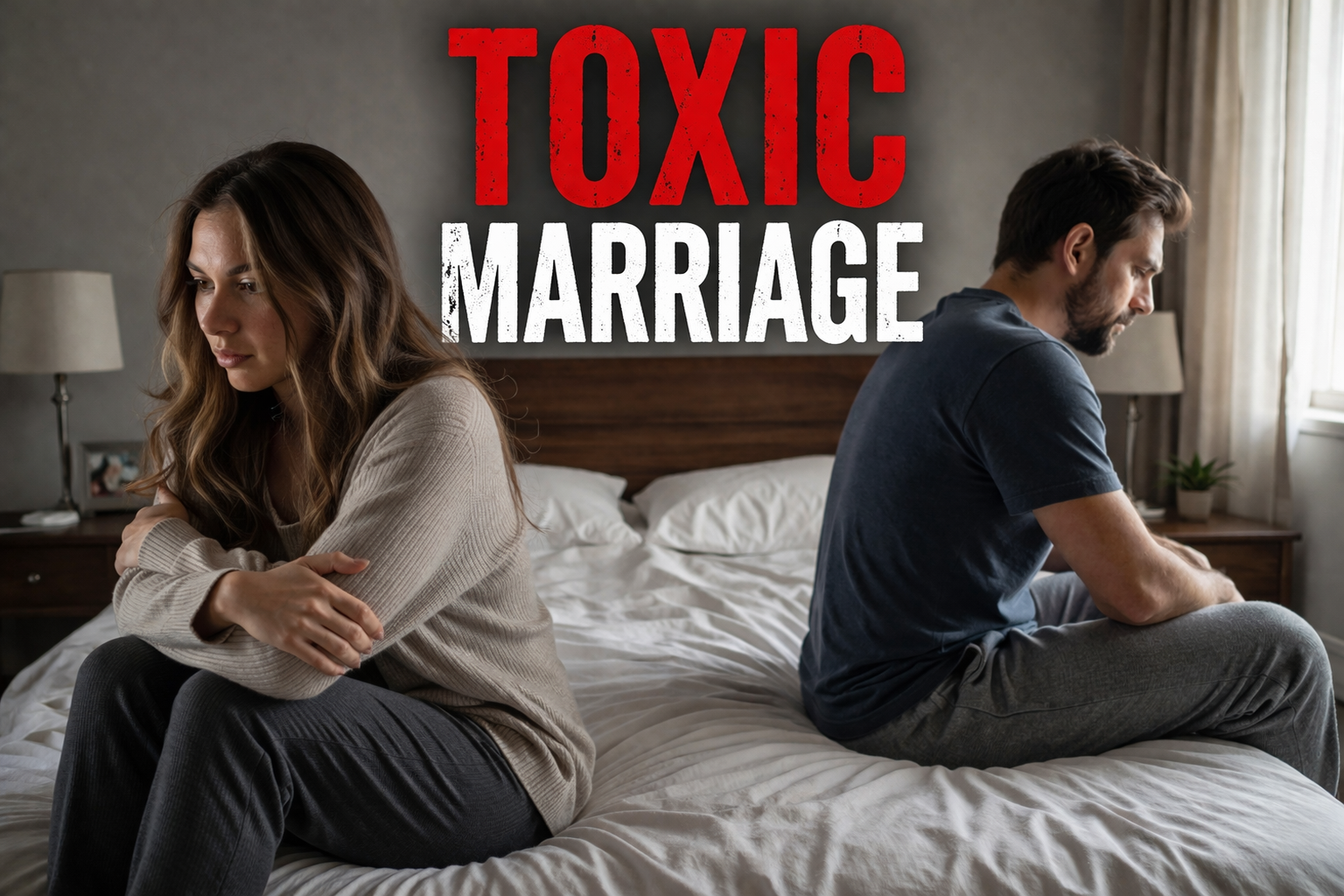
Introduction: When a Marriage Stops Feeling Safe
A healthy marriage isn’t perfect—but it should feel safe, supportive, and stable most of the time. If your relationship leaves you feeling drained, anxious, or emotionally disconnected, you may be dealing with something deeper than normal ups and downs.
A toxic marriage isn’t always loud or obvious. Sometimes it builds slowly through repeated patterns of behavior that chip away at trust, respect, and emotional security.
If you’ve been questioning your relationship lately, this guide will help you recognize the warning signs—and understand what they really mean.
What Is a Toxic Marriage?
A toxic marriage is a relationship marked by consistent emotional harm, unhealthy communication, and unresolved conflict. Unlike occasional disagreements, toxicity becomes a pattern—one that affects your mental, emotional, and even physical well-being over time.
It’s important to remember:
Not every struggling marriage is toxic. But when negative patterns become the norm rather than the exception, it’s time to take a closer look.
1. Unpredictable Mood Swings That Keep You on Edge
One moment your partner is loving, the next they’re angry or distant. This emotional inconsistency can leave you constantly walking on eggshells, unsure of what might trigger the next outburst.
2. Your Mental Health Is Suffering
If your relationship is causing ongoing sadness, anxiety, or even depression, that’s a major red flag. A toxic marriage often spills into every part of your life, making it harder to feel like yourself.
3. You Feel Drained All the Time
Emotional exhaustion is one of the clearest signs of toxicity. Instead of feeling energized by your partner, you feel depleted—mentally, emotionally, and even physically.
4. You Pretend Everything Is Fine
Do you find yourself constantly telling others how “great” your marriage is—even when it isn’t? Overcompensating can be a way of hiding deeper dissatisfaction.
5. Trusted People Are Concerned About You
Sometimes, the people who care about you notice things you’re too close to see. If multiple trusted friends or family members express concern, it’s worth paying attention.
6. You’re Becoming Secretive
Healthy independence is normal, but secrecy is different. If you feel the need to hide friendships, conversations, or activities, it could signal disconnection or fear within the relationship.
7. Thoughts of Infidelity Cross Your Mind
Whether it’s you or your partner, thinking about cheating often reflects unmet emotional needs or a desire to escape the current situation.
8. Trust Has Been Broken—or Is Fading
Trust is the foundation of any marriage. If you feel the need to constantly defend yourself or question your partner’s honesty, that foundation may already be cracked.
9. You Don’t Turn to Your Partner for Support
In a healthy relationship, your spouse should be your safe space. If you find yourself going to others instead, it’s a sign something important is missing.
10. Emotional Distance Is Growing
When conversations feel shallow and connection fades, emotional distance sets in. Over time, this can make you feel like roommates instead of partners.
11. You’re Always the One to Blame
In a toxic marriage, one partner often becomes the scapegoat. No matter what happens, you’re made to feel responsible—even for things outside your control.
12. Financial Dishonesty Is Present
Secrets around money—hidden spending, debt, or accounts—can damage trust deeply and create long-term instability.
13. You Avoid Your Partner by Focusing Elsewhere
Spending extra time with work, friends, or even your children can sometimes be a way to avoid conflict at home.
14. Your Partner Tries to Control Your Life
If your choices, finances, or relationships are constantly monitored or dictated, this is a strong sign of a toxic marriage.
15. Manipulation Has Become Normal
Manipulation can show up as guilt-tripping, twisting arguments, or making you doubt your own reality. Over time, it can seriously impact your confidence.
16. You Enable Unhealthy Behavior
Sometimes, toxicity is maintained by both partners. If you constantly give in just to “keep the peace,” it may reinforce negative patterns.
17. Small Issues Turn Into Major Conflicts
In toxic relationships, minor disagreements often explode into bigger fights. The real issue usually lies beneath the surface, unresolved.
18. Boundaries Are Ignored or Disrespected
When you set limits but they’re repeatedly crossed, it signals a lack of respect—and allows toxic behavior to grow.
19. You Feel Isolated From Others
A toxic marriage can slowly cut you off from friends and family, either intentionally or indirectly, leaving you feeling alone.
20. You’re Constantly Tense at Home
Home should be a place to relax. If you feel anxious, uncomfortable, or on edge around your partner, something isn’t right.
21. You Find Reasons to Stay Away From Home
When being anywhere else feels better than being at home, it’s often a sign that your environment has become emotionally unsafe.
22. Communication Feels Like a Battle (NEW)
Every conversation turns into an argument, or worse—silence. Healthy communication disappears, replaced by defensiveness or avoidance.
23. You’ve Lost Yourself in the Relationship (NEW)
One of the most overlooked signs of a toxic marriage is losing your identity. Your needs, goals, and happiness slowly take a back seat.
Can a Toxic Marriage Be Fixed?
Not all toxic marriages are beyond repair. If both partners are willing to acknowledge the issues and actively work on them, change is possible.
This often requires:
- Honest communication
- Setting clear boundaries
- Seeking professional help (like counseling)
- Consistent effort from both sides
However, if only one person is trying, progress becomes difficult.
When It Might Be Time to Walk Away
If the relationship involves ongoing emotional harm, manipulation, or control—and nothing improves despite effort—it may be time to consider a different path.
Leaving isn’t failure. Sometimes, it’s the healthiest decision you can make for your well-being.
Final Thoughts: Trust What You Feel
If you’ve been questioning whether you’re in a toxic marriage, that feeling matters. You don’t need everything to be “extreme” to justify concern.
Start by being honest with yourself. Awareness is the first step toward clarity—and ultimately, toward a healthier, more fulfilling life.
