
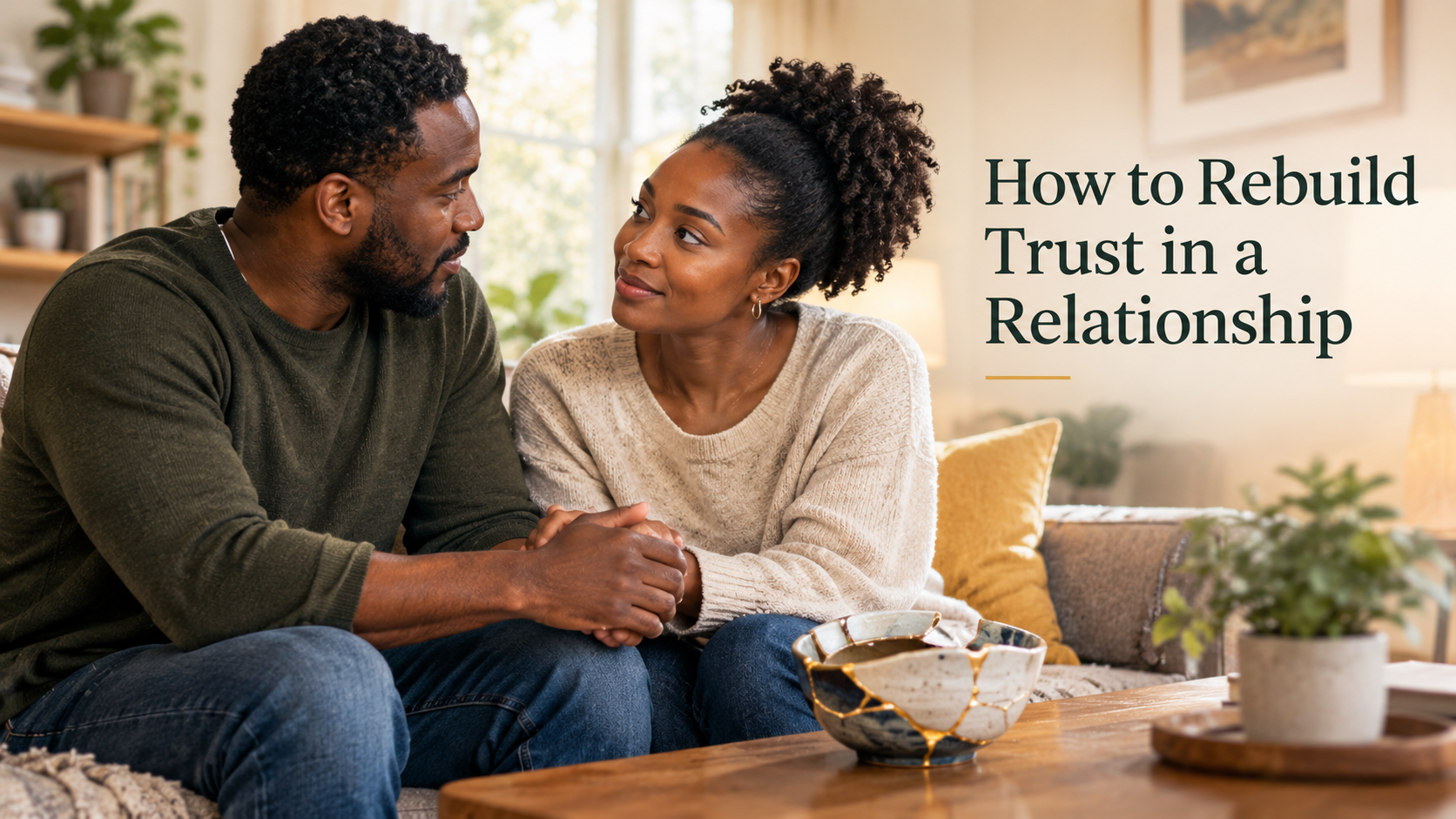
Why is trust important in a relationship? Trust is important because it creates the emotional safety, honesty, reliability, and security that allow two people to build a healthy relationship. When partners trust each other, they can communicate openly, be vulnerable, respect each other’s independence, handle disagreements more constructively, and feel confident that their relationship has a stable foundation.
Trust does not mean believing that your partner will never make a mistake. It means having reasonable confidence that they will be honest with you, respect your boundaries, keep important commitments, and take responsibility when something goes wrong.
Without trust, even strong feelings can become overshadowed by suspicion, jealousy, insecurity, fear, and repeated conflict.
Trust is therefore not simply one quality of a healthy relationship. It influences many of the things that make a relationship feel safe, connected, and sustainable.
What Does Trust Mean in a Relationship?
Trust in a relationship means believing that your partner is dependable, honest, respectful, and genuinely invested in the relationship.
It develops when someone’s words and actions consistently match.
For example, if your partner says they will call you after work and consistently follows through, that small experience reinforces trust. If they admit when they have made a mistake instead of hiding it, trust can grow further.
Trust can include confidence that your partner will:
- Tell you the truth.
- Respect your boundaries.
- Keep important promises.
- Listen to your concerns.
- Protect your vulnerability.
- Respect your privacy.
- Support you during difficult situations.
- Communicate when something is wrong.
- Take responsibility for their actions.
- Treat you with respect even during disagreements.
Healthy trust is built through patterns of behavior rather than one conversation or one promise.
Why Is Trust Important in a Relationship?
Trust is important because it affects almost every major part of a relationship, from communication and emotional intimacy to conflict, independence, affection, and long-term security.
Here are the most important reasons trust matters.
1. Trust Creates Emotional Safety
A healthy relationship should give both partners a reasonable sense of emotional safety.
When you trust your partner, you can share your thoughts, feelings, fears, and insecurities without constantly worrying that they will use your vulnerability against you.
You can say:
“That hurt me.”
You can admit:
“I’m feeling insecure.”
You can explain:
“I need more support from you.”
And you can talk about difficult subjects without automatically assuming that honesty will destroy the relationship.
Emotional safety does not mean that partners never disagree. It means you can disagree while still feeling respected and valued.
Without trust, people often become emotionally guarded. They may hide what they really feel because being vulnerable no longer feels safe.
2. Trust Makes Honest Communication Easier
Communication becomes much harder when one or both partners constantly question each other’s intentions.
If you trust your partner, you are more likely to explain what you actually need instead of expecting them to guess.
For example, instead of saying:
“You obviously don’t care about me.”
you might say:
“I’ve been feeling disconnected from you lately, and I would like us to spend more quality time together.”
Trust creates space for conversations like this because both people can approach difficult subjects without immediately assuming the worst.
Honest communication also makes it easier to discuss mistakes, expectations, boundaries, finances, intimacy, family issues, and future plans.
3. Trust Strengthens Emotional Intimacy
Emotional intimacy means allowing someone to know you on a deeper level.
That requires vulnerability.
You may share your biggest fears, personal experiences, dreams, regrets, or insecurities with someone only when you believe they will treat that information with care.
Trust makes this possible.
When partners repeatedly respond to vulnerability with empathy and respect, they learn that it is safe to open up.
Over time, this can create a deeper emotional connection.
4. Trust Reduces Unnecessary Suspicion
A lack of trust can make ordinary situations feel threatening.
A delayed text may become:
“Why aren’t they answering?”
A new friendship may become:
“Who is that person?”
A night out with friends may become:
“What are they really doing?”
When suspicion becomes constant, both partners can become exhausted.
Trust does not mean ignoring legitimate concerns. It means you do not automatically assume the worst every time something is unclear.
That distinction is important.
Healthy trust allows you to ask questions when something genuinely concerns you without turning the relationship into an ongoing investigation.
5. Trust Allows Partners to Be Independent
Being in a relationship does not mean losing your individuality.
Healthy couples can have their own friends, interests, hobbies, responsibilities, and personal time.
Trust makes this independence easier.
If your partner spends time with friends, for example, you do not automatically interpret their independence as a lack of love.
Similarly, you should be able to spend time doing things you enjoy without feeling that you have to constantly prove your commitment.
Trust allows two people to remain connected without controlling every aspect of each other’s lives.
6. Trust Helps Couples Handle Conflict
Every relationship experiences disagreements.
The goal of a healthy relationship is not to eliminate every conflict. It is to learn how to handle conflict without destroying the connection between you.
Trust can change the way partners experience disagreements.
Instead of thinking:
“This argument means our relationship is falling apart.”
you may be able to think:
“We have a problem that we need to work through.”
When partners trust each other, they may be more willing to listen, apologize, compromise, and look for solutions.
Trust creates the belief that a disagreement does not automatically mean abandonment.
7. Trust Makes Vulnerability Possible
Vulnerability requires emotional courage.
You may have to admit that you are scared, disappointed, confused, hurt, or uncertain.
That can be difficult when you are afraid your partner will judge, ridicule, reject, or exploit your feelings.
Trust reduces that fear.
A partner who responds to vulnerability with compassion communicates:
“You can be honest with me.”
That message can strengthen emotional intimacy and make future conversations easier.
8. Trust Builds Dependability
Trust grows when partners can depend on each other.
Dependability does not require perfection.
Everyone forgets something occasionally. Everyone has difficult days. Everyone makes mistakes.
What matters is the overall pattern.
A dependable partner generally does what they say they will do, communicates when circumstances change, and takes responsibility when they cannot keep a commitment.
Over time, these small experiences create confidence.
You learn:
“I can count on this person.”
That feeling is an important part of relationship security.
9. Trust Supports Physical and Romantic Intimacy
Trust can also influence physical and romantic intimacy.
People often find it easier to express affection, discuss boundaries, communicate preferences, and be physically vulnerable when they feel emotionally safe.
Partners need to be able to discuss subjects such as:
- Physical affection
- Sexual preferences
- Boundaries
- Consent
- Comfort
- Changes in desire
- Emotional connection
When trust is weak, insecurity, resentment, fear, or unresolved betrayal can make these conversations much more difficult.
Trust does not automatically create intimacy, but it can provide a safer environment in which intimacy can develop.
10. Trust Helps Couples Navigate Uncertainty
Relationships involve uncertainty.
You cannot predict every challenge you and your partner will face.
There may be job changes, financial pressure, family responsibilities, distance, unexpected problems, or major life transitions.
Trust gives couples something to rely on when circumstances are uncertain.
You may not know exactly what will happen, but you can have confidence that your partner will communicate with you, treat you respectfully, and work with you to address problems.
That shared confidence can make difficult periods easier to navigate.
What Does Trust Look Like in a Healthy Relationship?
Trust is sometimes easier to understand through behavior than through a definition.
A trusting relationship may include:
Listening and Supporting Each Other
Partners make an effort to hear each other rather than immediately dismissing each other’s concerns.
Respecting Boundaries
Both people understand that love does not give either partner unlimited control over the other.
Being Dependable
Partners make reasonable efforts to keep promises and follow through on important commitments.
Feeling Emotionally Safe
You can express yourself without constantly fearing humiliation, retaliation, or abandonment.
Matching Words With Actions
What someone says generally aligns with how they behave.
Allowing Reasonable Independence
Partners can have individual friendships, interests, and personal space without unnecessary suspicion.
Resolving Conflict Respectfully
Disagreements are addressed without deliberately trying to destroy the other person’s confidence or dignity.
Being Honest About Mistakes
Partners can acknowledge mistakes rather than creating additional problems through deception.
Respecting Privacy
Trust does not require constant surveillance of phones, messages, accounts, or locations.
These behaviors show that trust is not simply something you feel. It is something partners demonstrate through their actions.
What Happens When There Is No Trust in a Relationship?
When trust is missing, the relationship can become emotionally exhausting.
Common consequences include:
- Constant questioning
- Jealousy
- Repeated arguments
- Emotional distance
- Difficulty being vulnerable
- Fear of betrayal
- Excessive reassurance-seeking
- Monitoring or checking behavior
- Difficulty believing explanations
- Resentment
- Controlling behavior
- Reduced intimacy
A lack of trust can create a negative cycle:
Suspicion → conflict → defensiveness → emotional distance → less openness → more suspicion.
If that cycle continues for a long time, both partners may begin to feel disconnected.
This is why addressing trust problems early can be important.
What Causes Trust Issues in a Relationship?
Trust problems can develop for many different reasons.
Some are caused by what happens inside the current relationship, while others can be influenced by previous experiences.
Common causes include:
- Lying
- Infidelity
- Repeated broken promises
- Secrecy
- Emotional betrayal
- Financial dishonesty
- Disrespecting boundaries
- Inconsistent behavior
- Manipulation
- Repeatedly dismissing concerns
- Using someone’s private information against them
- Major disagreements about relationship expectations
However, not every trust issue is caused by the current partner.
Someone who has previously experienced cheating, abandonment, dishonesty, or another painful relationship experience may become more cautious in a new relationship.
They may think:
“What if it happens again?”
That fear can feel very real even when the current partner has not given them a reason to distrust them.
This is where self-awareness becomes important.
Why Is Trusting Yourself Also Important in a Relationship?
Trusting your partner and trusting yourself are connected, but they are not the same thing.
If you have experienced betrayal in the past, you may begin questioning your own judgment:
“How did I not see it before?”
“Can I trust my instincts?”
“What if I’m being fooled again?”
After painful experiences, it can be helpful to rebuild confidence in your own ability to recognize your feelings, establish boundaries, ask questions, and make decisions.
Self-trust does not mean assuming that every fear is correct.
It means being able to listen to yourself while also examining the evidence in front of you.
For example, there is a difference between:
“My previous partner cheated, so everyone will cheat.”
and:
“My previous experience hurt me, so I want to move slowly and pay attention to whether this relationship is consistent and respectful.”
The second approach allows past experiences to inform your boundaries without automatically controlling your present relationship.
Does Trust Mean You Should Never Question Your Partner?
No.
Healthy trust is not blind trust.
You can trust someone while still asking reasonable questions when something concerns you.
For example:
Healthy approach:
“Something about what happened confused me. Can we talk about it?”
Unhealthy approach:
“I already know you’re lying, so I’m going to check everything you do.”
Trust does not require you to ignore obvious inconsistencies or dismiss legitimate concerns.
Instead, it allows you to approach those concerns through communication rather than automatically assuming guilt.
How Do You Build Trust in a Relationship?
Trust develops through consistent actions.
Here are practical ways to strengthen it.
1. Keep Your Promises
Do what you say you will do.
If circumstances change, communicate rather than simply disappearing or breaking the commitment without explanation.
2. Tell the Truth, Especially When It Is Difficult
Honesty matters most when the truth is uncomfortable.
A difficult truth is generally easier for a relationship to process than a lie that creates additional damage.
3. Make Your Actions Match Your Words
If you say your partner matters to you, demonstrate that through your behavior.
Trust grows when people repeatedly see consistency between words and actions.
4. Respect Boundaries
Ask what your partner considers acceptable and communicate your own boundaries clearly.
Respecting boundaries shows that you care about your partner’s autonomy.
5. Communicate Directly
Do not rely entirely on assumptions or mind-reading.
If something bothers you, explain it.
If you need something, ask for it.
If you are confused, seek clarification.
6. Listen Without Immediately Becoming Defensive
When your partner expresses hurt, listen before rushing to prove that you are right.
You can disagree with their interpretation while still acknowledging their feelings.
For example:
“I didn’t intend to hurt you, but I understand why that situation affected you.”
7. Admit When You Are Wrong
A sincere apology can protect trust after a mistake.
Take responsibility for what happened rather than blaming your partner for your behavior.
8. Give Trust Time to Grow
Trust develops through repeated experiences.
You do not have to force deep trust immediately.
Let consistency demonstrate whether someone is dependable.
9. Avoid Controlling Behavior
Monitoring your partner’s phone, location, friendships, or social media may provide temporary reassurance, but it does not necessarily create genuine trust.
Healthy trust allows room for reasonable privacy and independence.
10. Repair Problems Instead of Ignoring Them
When trust has been damaged, pretending nothing happened rarely solves the underlying issue.
Talk about what happened, acknowledge the impact, identify what needs to change, and follow through.
Can Trust Be Rebuilt After It Is Broken?
Trust can sometimes be rebuilt after betrayal or dishonesty, but rebuilding it usually takes time.
Saying:
“Trust me again.”
does not automatically restore trust.
The person who damaged the trust generally needs to demonstrate through consistent behavior that they are willing to change.
Rebuilding trust may involve:
- Taking responsibility
- Being honest
- Answering reasonable questions
- Changing harmful behavior
- Respecting new boundaries
- Being consistent
- Allowing the hurt partner time to process what happened
- Following through on commitments
- Addressing the underlying problem
The person who was hurt may also need time to determine whether their sense of safety is returning.
Trust cannot be demanded.
It has to be demonstrated and experienced over time.
How Long Does It Take to Build Trust in a Relationship?
There is no universal timeline.
Trust can begin with small experiences but become stronger through repeated patterns.
For example, one kept promise may create a small amount of confidence.
Dozens of consistent experiences can create something much stronger.
That is why trust is better understood as a process than a single event.
Trust is built in moments and strengthened through patterns.
Likewise, when trust has been seriously damaged, rebuilding it may take considerably longer.
The timeline depends on what happened, how both partners respond, and whether meaningful behavioral change occurs.
Trust vs. Control in a Relationship
Trust and control can sometimes be confused.
A person who feels insecure may believe that controlling their partner will make the relationship safer.
They might want to:
- Check their partner’s phone.
- Know where they are at all times.
- Decide who they can spend time with.
- Demand constant updates.
- Monitor social media activity.
- Require repeated proof of love.
But control is not the same thing as trust.
Control attempts to eliminate uncertainty by restricting another person’s behavior.
Trust allows reasonable uncertainty while relying on honesty, boundaries, communication, and consistent behavior.
A healthy relationship needs security without turning into surveillance.
Signs You Have a Strong Foundation of Trust
No relationship is perfect, but trust may be relatively strong when both partners generally:
- Feel comfortable telling the truth.
- Can discuss difficult subjects.
- Respect each other’s boundaries.
- Give each other reasonable independence.
- Keep important commitments.
- Feel safe being vulnerable.
- Believe each other’s words based on established behavior.
- Address concerns directly.
- Take responsibility for mistakes.
- Apologize when necessary.
- Avoid deliberately humiliating each other.
- Feel confident that disagreements can be worked through.
- Support each other during difficult periods.
Trust does not mean that neither partner ever feels insecure.
It means insecurity can be discussed without automatically turning into control, accusations, or punishment.
Frequently Asked Questions About Trust in Relationships
Why is trust important in a relationship?
Trust is important because it creates emotional safety, supports honest communication, strengthens intimacy, encourages healthy independence, and helps partners handle conflict and uncertainty. It allows both people to feel that they can depend on each other without constantly fearing betrayal.
What is the most important part of trust in a relationship?
Consistency is one of the most important foundations of trust. When a person’s words and actions consistently match over time, their partner has repeated evidence that they are dependable.
Can a relationship survive without trust?
A relationship can continue for a period without strong trust, but persistent distrust can create serious problems with communication, intimacy, emotional safety, and conflict. A stronger relationship foundation generally requires honesty and reliability.
What destroys trust in a relationship?
Trust can be damaged by lying, cheating, repeated broken promises, secrecy, manipulation, disrespecting boundaries, and behavior that repeatedly contradicts what a partner has been told.
Can trust be rebuilt after cheating?
Trust can sometimes be rebuilt after infidelity, but it generally requires accountability, honesty, meaningful behavioral change, consistent actions, and time. Rebuilding trust is a process rather than something that happens immediately after an apology.
Is jealousy a lack of trust?
Jealousy can be connected to a lack of trust, but it can also come from insecurity, fear of loss, past experiences, or uncertainty. The important issue is how jealousy is handled. Constant monitoring and control can damage trust further.
How do you know if your partner trusts you?
A partner who trusts you will generally allow reasonable independence, communicate concerns directly, respect your privacy, believe your words based on your established behavior, and avoid constantly monitoring or testing you.
Does trusting someone mean giving them complete access to your phone?
No. Trust does not require surrendering all privacy. Healthy couples can establish boundaries around phones, messages, social media, and personal space while still being honest and committed to each other.
Why is trust important for long-term relationships?
Long-term relationships involve uncertainty, conflict, responsibilities, and change. Trust provides a foundation that helps partners communicate, cooperate, remain emotionally connected, and face challenges together.
Final Thoughts: Why Is Trust Important in a Relationship?
So, why is trust important in a relationship?
Because trust creates the foundation that allows two people to feel safe enough to connect deeply.
It supports honest communication. It makes vulnerability easier. It allows partners to maintain healthy independence. It reduces unnecessary suspicion and helps couples approach disagreements as problems to solve rather than threats to the entire relationship.
Trust also affects intimacy, reliability, emotional security, and long-term connection.
Most importantly, trust is not built through words alone.
It develops through everyday behavior.
You keep your promise.
You tell the truth when it is difficult.
You respect a boundary.
You listen when your partner is hurt.
You admit when you are wrong.
You give each other reasonable freedom.
You show through your actions that your partner can depend on you.
Those experiences gradually create confidence.
And when trust is damaged, it can sometimes be rebuilt—but usually through accountability, patience, consistency, and meaningful change rather than promises alone.
A healthy relationship does not require perfect trust every moment. It requires two people who understand that trust matters and are willing to protect it through the way they communicate and treat each other.
