
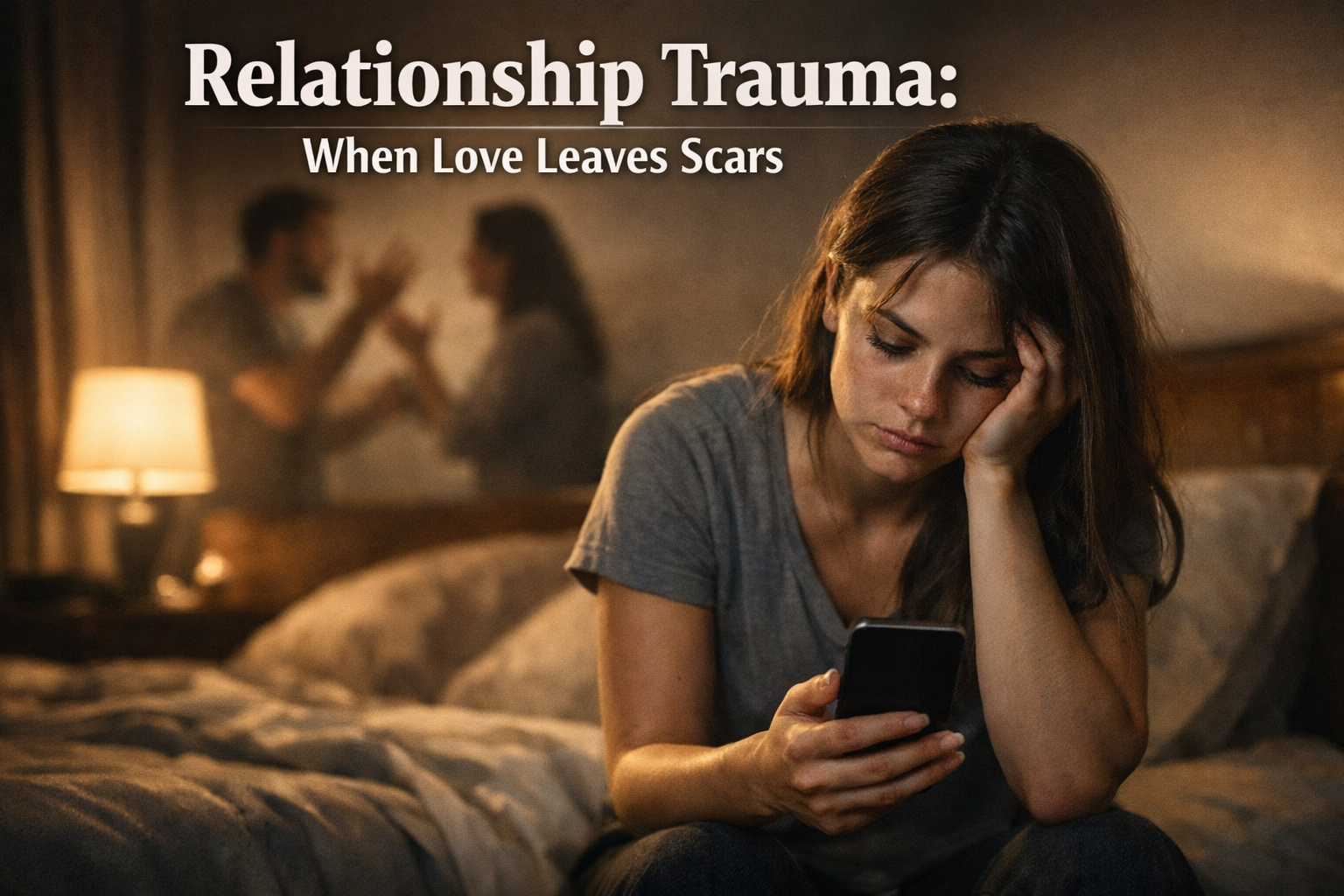
Relationship trauma doesn’t always look dramatic from the outside. Sometimes it shows up quietly—through anxiety, trust issues, or patterns you can’t seem to break. If you’ve ever felt emotionally unsafe, constantly on edge, or disconnected after a relationship, you’re likely dealing with relationship trauma.
This guide breaks it down clearly—what it is, why it happens, how it affects your mind, and most importantly, how to heal and rebuild.
What Is Relationship Trauma? (And Why It Stays With You)
Relationship trauma refers to the emotional and psychological wounds caused by harmful relationship experiences. These can come from romantic partners, but also from early family dynamics that shape how you experience love.
Unlike a one-time event, relationship trauma is often repetitive—cycles of emotional pain, manipulation, or neglect that gradually reshape how you see yourself and others.
Key forms of relationship trauma include:
- Emotional abuse (criticism, gaslighting, control)
- Physical or sexual abuse
- Chronic neglect or abandonment
- Betrayal (infidelity, broken trust)
- Toxic relational patterns repeated over time
PTRS vs PTSD: What’s the Difference?
Post-Traumatic Relationship Syndrome (PTRS) is often used to describe trauma specifically tied to relationships. While similar to PTSD, PTRS is more focused on emotional triggers tied to intimacy, trust, and connection rather than a single life-threatening event.
Hidden Signs of Relationship Trauma Most People Miss
Not all trauma is obvious. Many people function normally while carrying deep emotional wounds.
Emotional and psychological signs
- Constant anxiety in relationships
- Fear of abandonment or rejection
- Intense emotional reactions to small triggers
- Persistent guilt, shame, or self-blame
- Low self-worth or feeling “not enough”
Behavioral patterns
- Difficulty trusting others
- Avoiding closeness or intimacy
- Repeating toxic relationship cycles
- Over-apologizing or people-pleasing
- Hypervigilance (always expecting something to go wrong)
Physical and mental symptoms
- Sleep disturbances or nightmares
- Intrusive thoughts or flashbacks
- Emotional numbness
- Irritability or sudden mood swings
If several of these feel familiar, your mind may still be operating from a place of past emotional danger.
What Causes Relationship Trauma? (It’s Not Always Obvious)
Most people assume trauma only comes from extreme abuse. In reality, it often builds from repeated emotional harm.
Core causes include:
1. Power imbalance and control
One partner dominates emotionally, financially, or psychologically, creating fear and dependency.
2. Emotional manipulation patterns
Gaslighting, blame-shifting, and silent treatment can distort your reality and self-trust.
3. Unresolved past trauma
People who have unresolved wounds may unconsciously recreate harmful dynamics.
4. Substance abuse and instability
Addiction often intensifies unpredictability, fear, and emotional harm.
5. Early attachment wounds
Childhood experiences shape how safe or unsafe love feels later in life.
How Relationship Trauma Affects Mental Health and Attachment
Relationship trauma doesn’t stay in the past—it rewires how you experience connection.
Mental health impact
- Anxiety and chronic stress
- Depression or emotional numbness
- Obsessive thoughts about relationships
- Increased emotional reactivity
Attachment and relationship patterns
- Fearful or avoidant attachment styles
- Difficulty feeling safe even in healthy relationships
- Attracting familiar (but unhealthy) partners
- Confusing intensity with love
Trauma bonding explained
Trauma bonding happens when cycles of pain and reward create emotional addiction. The brain becomes attached not despite the harm—but because of the emotional highs and lows.
Types of Abuse That Lead to Relationship Trauma
Understanding what qualifies as harmful is key to recognizing trauma.
Emotional and psychological abuse
- Insults, humiliation, and criticism
- Gaslighting and manipulation
- Isolation from friends or support
Physical abuse
- Hitting, pushing, restraining, or threats of harm
Sexual abuse
- Lack of consent, coercion, or pressure
Financial abuse
- Controlling money or restricting independence
Not all trauma comes from visible harm—emotional patterns can be just as damaging.
10 Clear Signs You’re Still Carrying Relationship Trauma
- You struggle to trust even safe people
- You feel anxious in close relationships
- You expect abandonment or betrayal
- You overreact to minor conflicts
- You avoid vulnerability
- You repeat unhealthy relationship cycles
- You have strong emotional triggers
- You find it hard to set boundaries
- You blame yourself for past relationships
- You feel emotionally exhausted or numb
How to Heal from Relationship Trauma (Step-by-Step)
Healing isn’t about “moving on” quickly—it’s about rebuilding safety within yourself.
1. Create emotional safety first
Distance yourself from harmful environments or people. Healing cannot happen where damage continues.
2. Identify your triggers
Notice what situations, words, or behaviors cause strong reactions.
3. Set boundaries without guilt
Boundaries are not rejection—they are protection.
4. Rebuild self-trust
Start making small decisions for yourself and honoring them.
5. Practice grounding techniques
Breathing exercises, mindfulness, and body awareness help calm your nervous system.
6. Challenge negative beliefs
Replace thoughts like “I’m not enough” with balanced, realistic perspectives.
7. Build a support system
Surround yourself with people who respect and validate you.
8. Communicate your needs
In safe relationships, express what helps you feel secure.
9. Allow yourself to feel
Suppressing emotions prolongs healing—processing them releases their grip.
10. Celebrate progress
Healing is slow. Small wins matter more than perfection.
Therapy and Treatment Options That Actually Help
Professional support can accelerate recovery significantly.
Effective therapy approaches:
- Cognitive Behavioral Therapy (CBT)
- Dialectical Behavior Therapy (DBT)
- Eye Movement Desensitization and Reprocessing (EMDR)
- Trauma-informed therapy
Additional support options:
- Support groups
- Psychiatric care when needed
- Guided self-help practices
Seeking help is not weakness—it’s a strategic step toward recovery.
When Should You Seek Professional Help?
You should consider support if:
- Trauma affects your daily functioning
- You experience flashbacks or intrusive thoughts
- You feel stuck in repeated patterns
- You struggle with anxiety, depression, or emotional regulation
Early support prevents long-term emotional damage.
How to Rebuild Trust and Love After Relationship Trauma
Healing doesn’t end with understanding—it continues in how you relate moving forward.
Rebuilding trust starts with:
- Moving slowly in new relationships
- Observing consistency, not just words
- Letting people earn access to your vulnerability
- Accepting that fear may still show up—but doesn’t control you
Healthy love feels calm, safe, and stable—not chaotic or overwhelming.
The Reality Most People Don’t Talk About
Healing from relationship trauma doesn’t mean you forget what happened.
It means:
- The memories lose their emotional charge
- You respond instead of react
- You choose better relationships
- You feel safe being yourself again
Scars may remain—but they stop controlling your life.
Final Takeaways: What Healing Really Looks Like
- Relationship trauma can last long after the relationship ends
- It affects your mind, body, and future connections
- Awareness is the first step toward breaking the cycle
- Healing requires safety, boundaries, and support
- Healthy relationships are possible again—with time and intention
