
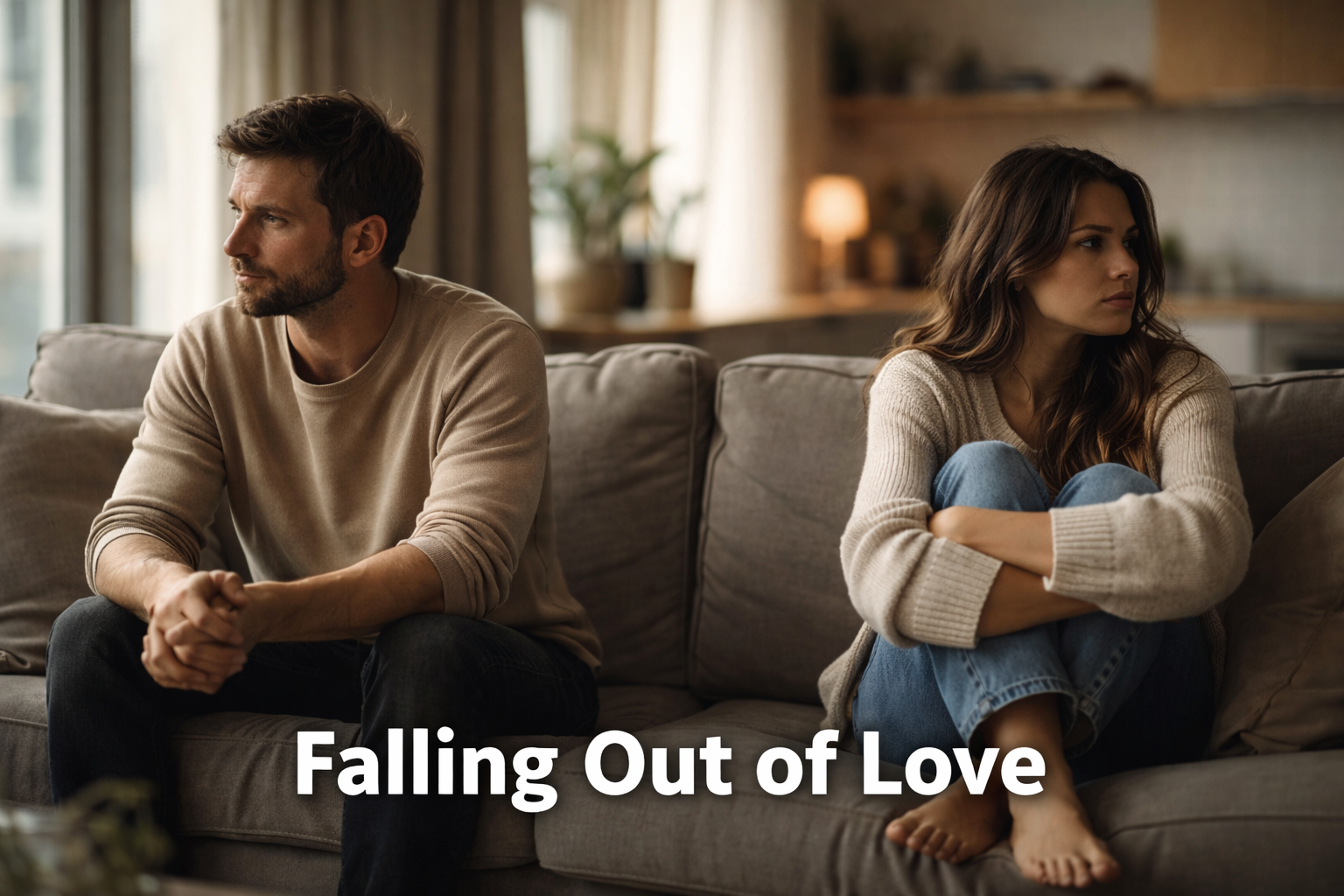
Few experiences feel as confusing—or as heartbreaking—as wondering whether you’re falling out of love with someone you once cherished. People rarely arrive at that question suddenly. It usually comes after months (or even years) of subtle emotional shifts, quiet disappointments, and internal debates. And because love isn’t something we choose to feel on command, the fear of hurting a partner can make the entire process even more agonizing.
If you’re searching for clarity, you’re not alone. Many people wrestle with this same question:
“Are these feelings temporary, or is my relationship truly fading?”
This guide breaks down the unmistakable signs of emotional disconnection, why they happen, and how to understand whether the relationship can still be revived. You’ll also find a practical self-assessment at the end.
Let’s begin.
1. Your Patience Has Thinned: The First Clue of Emotional Drift
In a healthy relationship, patience isn’t something you force—it flows naturally. You give your partner the benefit of the doubt. Their little quirks might even make you smile. You choose understanding over reaction because, deep down, you feel connected.
But when you start falling out of love, that emotional cushion begins to disappear.
Suddenly, things that never used to bother you start getting under your skin. The way they talk, their habits, even their presence can feel overwhelming. You find yourself reacting quicker, snapping more easily, or going silent just to avoid saying something harsh.
It’s not just about being “moody” or stressed—it’s deeper than that.
You may begin to:
- Feel irritated over small, insignificant things
- Replay their mistakes in your mind instead of letting them go
- Assume they meant harm, even when they didn’t
- Focus more on what they do wrong than what they do right
What’s really happening here is emotional distance.
When love is strong, your mind naturally protects the relationship. You soften your judgments. You try to understand. You give grace. But when that emotional bond weakens, your mindset shifts from “we’re on the same team” to “you’re the problem.”
And that shift changes everything.
Patience is often rooted in care. When you deeply care about someone, you’re willing to pause, listen, and work through things. But when that care starts fading—even subtly—your tolerance fades with it.
It’s also worth noting that this doesn’t always happen suddenly. It can creep in quietly. One day you’re laughing at something they do, and a few weeks later, that same thing irritates you. You might not even realize when the shift began.
That’s why this sign is so important.
A thinning patience isn’t just about annoyance—it’s often one of the earliest emotional indicators that something inside you has changed. It reflects a heart that is no longer as invested, as gentle, or as emotionally available as it once was.
And if left unaddressed, this pattern can slowly turn into resentment—where every interaction feels like a burden instead of a choice.
The key question to ask yourself is this:
“Am I reacting to who they are… or to how I now feel about them?”
Because sometimes, the problem isn’t what they’re doing differently.
It’s that your feelings are.
2. Affection Feels Forced or Fading
In the early stages of love, affection flows effortlessly: holding hands, leaning into each other, exchanging soft touches. Over time, these gestures naturally evolve, but they shouldn’t disappear entirely.
A fading connection often shows up as:
- Less desire to cuddle or be physically close
- Sexual intimacy feeling obligatory or absent
- Kissing out of habit rather than emotion
- Feeling neutral—not comforted—by your partner’s touch
When physical closeness no longer feels nurturing, it’s worth asking whether emotional closeness has shifted too.
3. You Don’t Crave Connection When Apart
Partners who are emotionally bonded tend to stay connected, even in small ways.
But when love begins to fade:
- Texts become logistical, not loving
- You no longer feel the urge to share your day
- You notice the silence, but don’t mind it
- Reuniting feels routine, not energizing
This doesn’t necessarily mean the relationship is over—but it does point to an emotional gap that wasn’t there before.
4. Your Priorities Have Shifted—and Not Toward Your Partner
In committed relationships, your partner naturally becomes a central figure in your emotional world. Even when life gets busy, you make room for each other.
If you’re falling out of love, priority shifts happen quietly:
- You choose others over your partner more often
- Supporting them feels like an obligation
- You no longer rearrange your schedule to be there for them
- Their needs feel heavier instead of meaningful
This shift isn’t about busyness—it’s about emotional bandwidth.
5. You Offer Less Emotional Care Than You Used To
When we love someone deeply, we nurture them instinctively. We comfort them in their low moments, listen with patience, and offer reassurance without hesitation.
But when love begins to thin:
- You want to “fix” their feelings quickly so you can move on
- Emotional caretaking feels draining
- You feel resentment when they need support
- You avoid deeper conversations
Nurturing becomes effortful instead of natural.
6. You’re Sharing More With Others Than With Your Partner
In close relationships, couples protect each other’s vulnerabilities. They hold sacred the personal stories, insecurities, and private struggles told in confidence.
But emotional distancing sometimes leads to:
- Talking about relationship frustrations with others
- Venting instead of resolving issues together
- Minimizing your partner’s feelings when speaking to others
- Letting private matters slip because the emotional bond is fading
Once reverence is lost, trust soon follows.
7. The Relationship Feels Heavy, Drained, or On Autopilot
Energy is one of the clearest indicators of emotional health.
When love is alive, the connection feels:
- Motivating
- Engaging
- Full of presence
- Emotionally responsive
When love is slipping, the relationship becomes:
- Mechanical
- Flat
- Predictable
- Draining rather than nourishing
This “emotional flatline” is one of the strongest signs you may be falling out of love without fully realizing it.
8. You Feel More Yourself Away From the Relationship (New Extra Section)
One sign people rarely talk about is this:
You feel lighter, freer, or more authentically “you” when your partner isn’t around.
This might show up as:
- Increased creativity or energy when alone
- A sense of relief after leaving the house
- Reaching out to friends more because it feels easier
- Feeling your personality “expand” away from the relationship
You shouldn’t dread reconnecting with someone you love. If distance feels like freedom, it’s important to explore why.
9. You’ve Stopped Imagining a Future Together (New Extra Section)
When love is strong, the future feels shared—your decisions naturally include your partner.
But when you’re falling out of love:
- You picture your future independently
- Long-term plans feel burdensome
- Commitment makes you anxious instead of excited
- The idea of ending the relationship brings more relief than grief
Visualizing a life without your partner can be a significant emotional milestone.
The 15-Question Self-Assessment: Are You Falling Out of Love?
Answer each question honestly using this scale:
No = 1
Kind of = 2
Some of the time = 3
Mostly = 4
Yes = 5
- Would you feel more relief than sadness if the relationship ended?
- Do you focus more on what’s wrong now than what you once loved?
- Have you been avoiding sharing your true feelings with your partner?
- Are you confident your unhappiness is about the relationship?
- Do you reject your partner’s attempts to comfort or connect?
- Are you withholding affection, kindness, or care?
- Is your partner no longer a priority in your life?
- Have you stopped putting real effort into the relationship?
- Do you dismiss or turn away your partner’s efforts to improve things?
- Are you hiding what you truly feel from them?
- Do you feel more alive when you’re away from your partner?
- Are you more easily irritated by them than before?
- Have you shared private frustrations about your partner with others?
- Are you tired of trying to fix or improve the relationship?
- Do you often wish you were free to start over?
Scoring Guide
- 0–15: You’re still fully invested—focus on communication and connection.
- 16–30: You’re uncertain—your relationship may be salvageable with intentional effort.
- 31–45: Serious concerns—consider counseling or deep conversation.
- 46–60: Hanging on by a thread—emotional disengagement is strong.
- 61–75: Emotionally checked out—you’ve likely left the relationship in your mind already.
Before Walking Away, Ask Yourself This
Ending a relationship is never simple. Even when you’re falling out of love, the grief can be profound. Most couples start with hope, devotion, and genuine belief in a shared future. But relationships evolve, and sometimes that evolution leads in different directions.
Yet not all fading feelings are permanent.
Sometimes they reflect:
- Stress
- Exhaustion
- Lack of communication
- Emotional neglect
- Unresolved conflicts
- Unmet needs that were never spoken aloud
Before making your final decision, have a vulnerable, honest conversation. Tell your partner what you’re feeling. Give them the chance to show up. Many relationships revive when both partners understand what’s broken.
Final Thoughts: Clarity Is the First Step Toward Healing—Together or Apart
Falling out of love doesn’t make you a bad partner. It makes you human. What matters most is self-honesty and compassion—for yourself and for the person who once held your heart.
If the relationship can be rebuilt, transparency creates room for healing.
If it’s time to part ways, honesty allows both people to move forward with dignity.
Either way, clarity is the gift you owe yourself.
